Miss Kittin
Caroline Hervé found her public voice as Miss Kittin, the cool, sardonic presence on records that helped define electroclash at the end of the 1990s. The name became larger than the moment. What followed was a long exercise in deciding which parts of it still belonged to her: first through solo work, then by taking back her original name, and eventually by treating control over her time as the clearest measure of success. 123

Contents
A voice arrives first
The breakthrough came with The Hacker. Frank Sinatra and 1982, both released in 1998, joined stark electronic production to a delivery that could sound detached, amused and confrontational at once. Hervé did not need to overpower the tracks. A few sharply placed lines created a character listeners could recognize immediately. As electroclash spread, that character became one of its defining voices. 1
The association opened a career and threatened to contain it. Hervé's solo records moved through house, Detroit techno and electro-pop on I Com, BatBox, Calling From the Stars and Cosmos. Each one widened the space around the persona, even as the old image remained the easiest shorthand for describing her. 1
The persona becomes a constraint
The tension was audible on BatBox in 2008. Resident Advisor found the album more coherent than I Com but uneven as a solo statement. Pollution of the Mind had immediate force while staying close to an established electro template; Playmate of the Galaxy worked as melodic techno, though the vocal performance struck the reviewer as overplayed. The sharp character that made Miss Kittin distinctive could also crowd the music around it. 4
One review does not settle the value of a record, much less a career. It captures the artistic problem facing Hervé at the time: a persona powerful enough to survive beyond its original scene, but powerful enough to make every new direction compete with a familiar version of Miss Kittin.
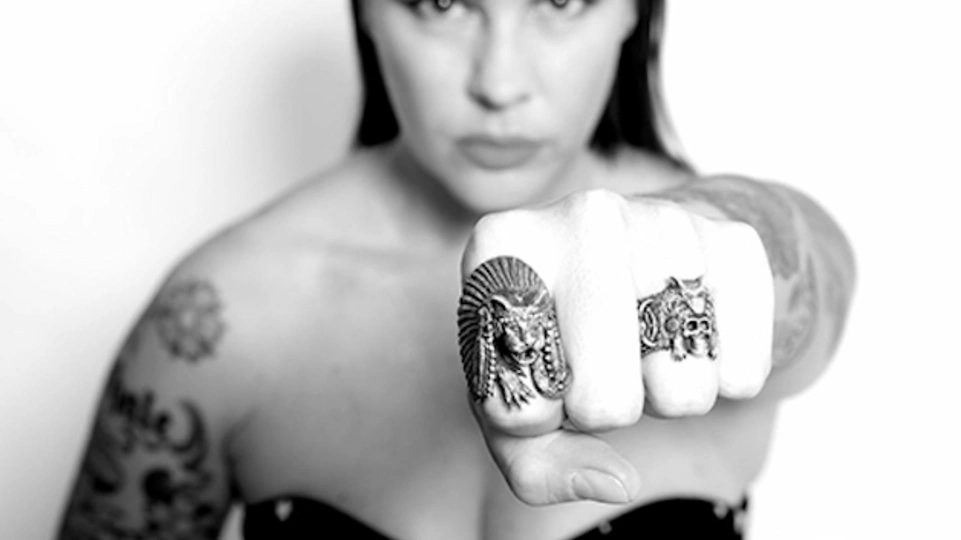
Taking the name back
Her most decisive move came a decade later. For Cosmos in 2018, Hervé dropped the prefix and released the album simply as Kittin, reclaiming the name she had chosen before a promoter added “Miss.” The change was more than cosmetic. Numéro described a record built around chords and textures, without conventional choruses, rhymes or four-on-the-floor demands. Ambient and electronica replaced the expectation that every idea should answer to pop form or the dancefloor. 2
The record also gave her long-held studio principles a clear purpose. Hervé has said that technology should remain easy and enjoyable because excessive complexity kills her creativity. She kept working with familiar software and a small studio, leaving room for accidents without turning equipment into the point of the work. Her test was communication: whatever the tools, the music had to tell a story and share emotion. On Cosmos, stripping away familiar structures made that priority audible. 562
This was not a rejection of club music or the Miss Kittin records. It was a separation of choice from expectation. Hervé could revisit the sounds that formed her without accepting the identity that promoters, audiences or an earlier era had fixed around them.
Returning without going backward
That distinction shaped her next reunion with The Hacker. Around Third Album in 2022, Kittin described the duo as a side project they resumed only when they missed each other and had something new to say. Three albums across three decades was not an inefficient release schedule. It was the schedule the friendship required. 7
Their stage show used old and new methods to keep the performance open. Instrumental versions ran on turntables while Kittin sang live with effects and The Hacker added synthesizer sequences. They could change the order, loop passages or bring in another track instead of following a fixed set. The format demanded more work than a conventional playback-based show, but it preserved the surprise that brought them back together. 7
Freedom as the result
Hervé had already connected longevity to integrity, discipline, passion and a life that did not revolve entirely around music. By 2025, she could name what those choices had produced. In an interview with Mixmag Spain, she said she had reached her goal of freedom: she could work when she wanted, where she wanted and with people she chose, at a rhythm that protected both her team and her life away from the industry. 83
The same freedom changed how she approached the booth. She wanted to play fewer dates and choose events that gave the travel and nightlife a reason. DJing, in this account, had become a contribution to a community rather than an endless demand to remain visible. Younger producers supplied new ideas; she returned the exchange by playing their music, collaborating and sharing what experience could offer without pretending that her route should become theirs. 3
The early Miss Kittin persona made attention look effortless. The longer achievement has been more deliberate. Hervé kept the voice, reclaimed the name behind it and earned the ability to decide when either one should speak.
References
| # | source | type |
|---|---|---|
| 1 | Apple Music artist profile | CATALOGUE |
| 2 | Numéro on Cosmos | FEATURE |
| 3 | Mixmag Spain interview | INTERVIEW |
| 4 | BatBox review | REVIEW |
| 5 | 15 Questions interview | INTERVIEW |
| 6 | The Ransom Note interview | INTERVIEW |
| 7 | fabric interview with Kittin and The Hacker | INTERVIEW |
| 8 | DJ Mag interview | INTERVIEW |