Dusty Kid
Dusty Kid is a composer who happened to build his career through club music. He wanted to write music long before he imagined himself as a DJ, and still describes techno, trance, pop and soundtrack work as parts of the same open palette. The underground found him almost by accident: he made a few EPs, established DJs began playing them, and a route he barely understood carried his music out of Sardinia. 1

Contents
The career, by era
Before the club
The synthesizer arrived by way of Mozart. Dusty Kid studied piano and violin as a child and entered the conservatory after progressing quickly. At eleven, he wanted to play the solo parts of Mozart piano concertos against an orchestra, so he asked for a machine that could hold the accompaniment. The Yamaha QY20 he received could sequence the orchestral parts, but it also contained samples from the TR-909 and TR-808 drum machines. His first encounter with electronics placed piano, programmed orchestra and a four-on-the-floor beat in the same small box. 2
The club becomes the route
That distinction mattered once his EPs entered the underground circuit. Dusty Kid remembers the change as fast and unexpected. Established DJs began placing his music in their sets while he was still learning how club records travelled between producers, selectors and audiences. Club culture became the route for the compositions, not the limit of what he wanted to compose. 1
By 2009, that route had led to A Raver's Diary, announced by Resident Advisor for an April release on Boxer Recordings. The same year brought an invitation to record a BBC Radio 1 Essential Mix. Dusty Kid approached it as more than a sequence of current club tracks: he gathered music from across the genres that had shaped him and tried to make the range cohere as an account of his background. 13
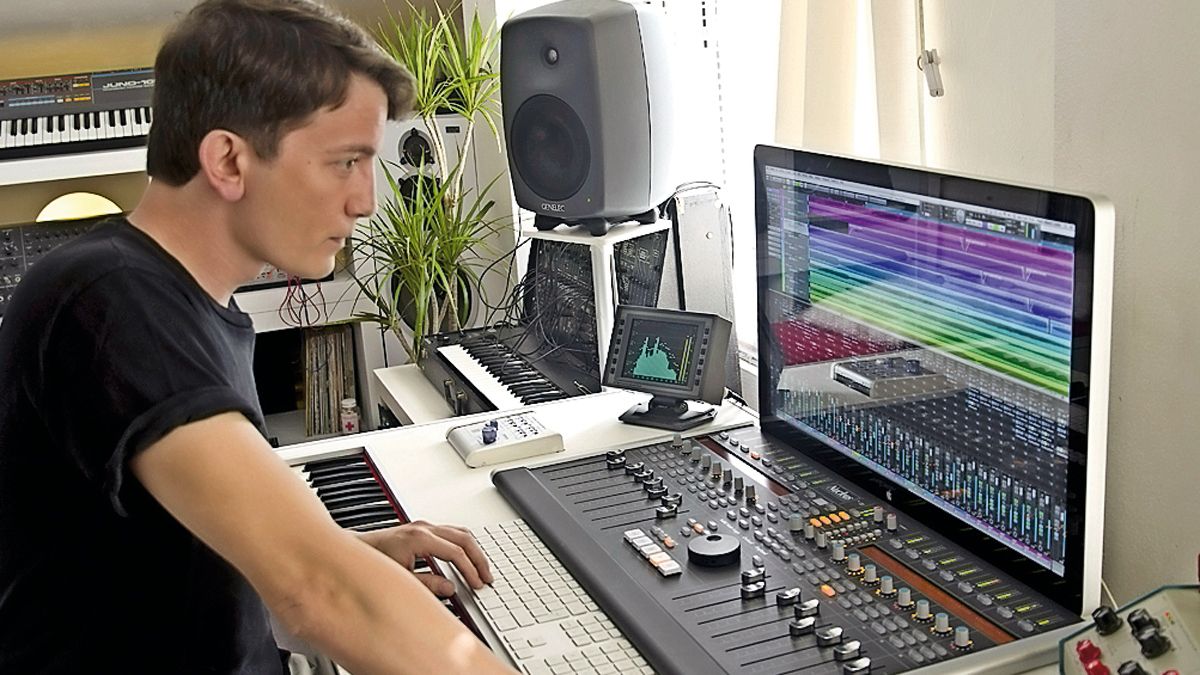
A Raver's Diary thinks in long form
In 2009, a review of A Raver's Diary heard a highly danceable album whose layers repeatedly receded and rebuilt. It follows America through guitar, organ, strings and changing synth patterns before Agaphes takes up the momentum. The music moved like a club record but developed on an album's scale. 4
Even its hardest turns involved compositional judgment. The Underground Persistence, placed second in the album's tracklist, originally had a melody and a different structure. Dusty Kid later recalled that the melody collided with the opening track and weakened the energy he wanted at that point in the sequence. He removed it, then pushed an MS-10 through delay to create the atonal sound in its place. Subtraction made the track more hypnotic while preserving the album's forward motion. 53
Albums record the changes
Beyond That Hill, released by Boxer in November 2011, moved toward harmony, landscape and a more private emotional register. Dusty Kid contrasted it with the melody-centred writing on A Raver's Diary: the subject could sit farther back and ask the listener to find it. On That Hug, he used eleven stereo pads across different frequencies to create a wall of sound. The density was not spectacle for its own sake; it allowed atmosphere to do work that a single leading melody had done before. 67
Looking back in 2016, he connected each of his first four albums to a different period of his life. He called A Raver's Diary exuberant, theatrical and naïve; Beyond That Hill more intimate; and III hidden, foggy and private. Not So Green Fields opened the frame again with voices, acoustic instruments and music intended to survive away from clubs and festivals. These were not four steps toward a perfected style. They were four attempts to give changing experiences an appropriate musical form. 8
III becomes one piece
For III, released through Isolade in November 2013, form became part of the composition. Dusty Kid wrote the tracks separately, then moved their components into one large set and built transitions between them. The album could be heard as individual tracks or as a continuous mix lasting nearly two hours. 29
He then reversed the process for the stage. The finished pieces were divided into stems and loops across eight channels, allowing sounds from one track to be combined with another during a performance. Instead of carrying delicate studio synthesizers on flights, he built a compact system that kept the album open to rearrangement. The record was composed into one sequence, then loosened again so it could move. 2
Distance changes the island
The most personal change concerned Sardinia itself. Dusty Kid recalled that the island had once felt like a prison: a small place, distant from the musical life he wanted. Touring altered the relationship. The farther he travelled each weekend, the more strongly he felt the island pulling him back. International club work gave him distance from home, and distance made home newly visible. 8
That reversal became part of Not So Green Fields. Dusty Kid said he makes albums when he has a story he wants to tell, record and remember. This one imagined a traveller from a cold northern country arriving in Sardinia during summer, encountering landscapes dried and burned rather than green. It also pushed against the practical limits of club music. Singles and EPs could remain direct tools for the dancefloor; the album had to balance dancing with listening and leave room for a larger human story. 18
The point is not to repeat
Dusty Kid described an album as the difficult work of making many influences believable across an hour. Another A Raver's Diary might have pleased listeners who wanted one, but he regarded the exercise as pointless. The career that began when club DJs discovered his EPs gave him an audience. The composer kept moving because serving that audience did not require writing the same record twice. 8
References
| # | source | type |
|---|---|---|
| 1 | XWHY interview | INTERVIEW |
| 2 | Ableton interview on *III* and live performance | INTERVIEW |
| 3 | *A Raver's Diary* release announcement | NEWS |
| 4 | Optimistic Underground review of *A Raver's Diary* | REVIEW |
| 5 | *A Raver's Diary* track-by-track | FEATURE |
| 6 | DMC World interview | INTERVIEW |
| 7 | *Beyond That Hill* catalogue page | CATALOGUE |
| 8 | MusicRadar studio interview | INTERVIEW |
| 9 | *III* catalogue page | CATALOGUE |